

For most small farms and start-ups in 2025, a reliable small feed pellet machine costs between roughly USD 200 and USD 6,000 depending on origin, capacity, drive type, and configuration; factory-direct basic single-phase mini units commonly sit in the low hundreds while higher-quality flat-die or small ring-die units for continuous farm use typically fall in mid-hundreds to several thousand dollars. When total cost of ownership is counted — including dies, spare parts, installation, power or engine, and maintenance — the true short-term budget should start at the lower price point and the longer-term investment horizon should plan for midrange machines for durable, economical operation.
1. What a small feed pellet machine is and who buys one
A small feed pellet machine compresses ground feed ingredients into dense cylindrical pellets sized for poultry, swine, fish, rabbits and other livestock. Buyers include smallholders, backyard and hobby farms, feed co-ops, small commercial feed mills, pet food micro-producers and researchers. Machines intended for small-scale use are designed to be compact, energy efficient and straightforward to maintain, but they vary greatly in build quality and life expectancy.
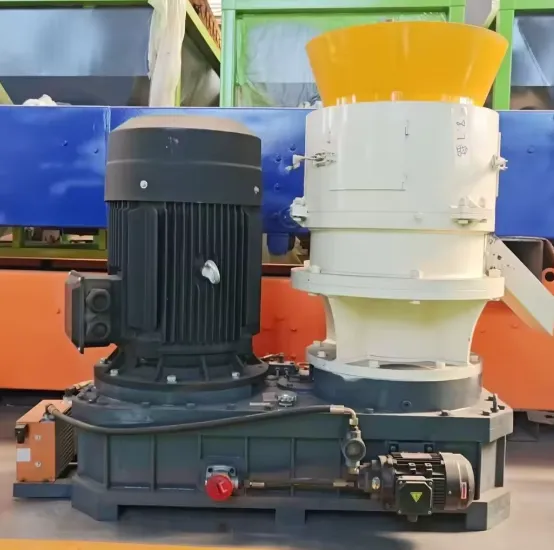
2. Price ranges summarized with context
Price on the product listing alone is not the only cost a buyer faces. Typical seller price windows observed across popular marketplaces and factory listings in 2025 are:
-
Very small, home-use single-phase units: approximately USD 120–600. These are often flat-die desktop or benchtop machines, suitable for trial runs and occasional production.
-
Small farm/continuous single machine units: roughly USD 500–3,000 for robust flat-die units with 1–1,100 kg/h or similar rated capacity. These are common factory offers on China B2B sites.
-
Small ring-die or compact production lines (0.5–2 t/h): USD 3,000–20,000 depending on automation, included pre-/post-processing equipment, and local standards. Larger packaged feed plants cost more.
-
Complete small pellet systems with dryer, cooler and packing: can move into USD 10,000+ territory for turnkey solutions and small factories.
Those ranges come from a cross-section of factory listings, marketplace ads and specialist suppliers. Real transaction price depends on bargaining, quantity, warranty and shipping arrangements.
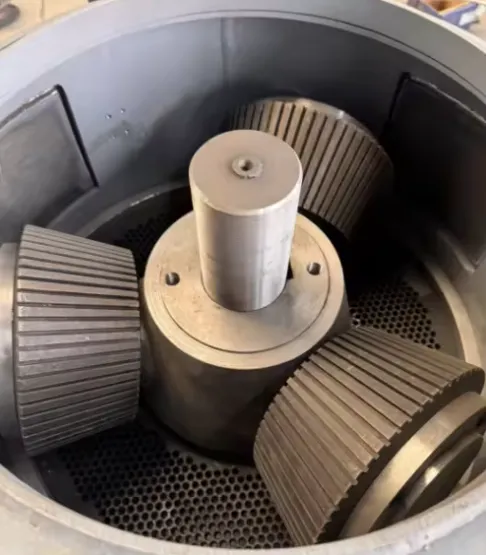
3. Types and features that most change price
A machine’s architecture matters. Key types and how they affect cost:
-
Flat die pellet mills: simplest and least expensive. Flat die units press feed through a horizontal die. Ideal for intermittent production and small batches. Lower upfront cost but dies wear faster under heavy use.
-
Ring die pellet mills: costlier but built for continuous production and higher throughput. Ring die design typically yields steadier pellet quality and longer die life for industrial use.
-
Extruder pelletizers: used for specialized feeds (expanded pellets, high-fat formulas). Higher price, often used by feed formulators.
-
Drive type: single-phase electric, three-phase electric, diesel engine, or PTO (tractor). Diesel/PTO options add flexibility for off-grid farms but increase price and maintenance needs.
-
Automation, controls and safety: digital feeders, temperature monitoring, automatic lubrication and overload protection raise the price and reduce operator time.
-
Material and manufacture quality: hardened steels, quality bearings and precision dies add to manufacturing cost and longevity. Stainless contact points increase price for hygiene sensitive uses.
4. Capacity, power and yield: mapping specs to cost
Below is a representative specification table for small machines; use it for budgeting and comparing models.
| Model category | Rated output | Typical motor/engine | Typical price (USD) | Typical use |
|---|---|---|---|---|
| Mini benchtop | 15–60 kg/h | 1.5–4 kW single-phase | 120–600 | Home, trials, micro farms |
| Small farm flat-die | 60–600 kg/h | 4–22 kW three-phase | 500–3,000 | Small poultry/swine farms |
| Small ring-die | 600–2,000 kg/h | 20–75 kW | 3,000–20,000 | Small feed mills, co-ops |
| Compact line (with hammer mill, mixer) | 0.5–2 t/h | Multiple machines | 8,000–50,000+ | Small commercial feed plants |
Capacity numbers and price brackets align with multiple supplier listings across B2B platforms and specialty suppliers. For instance, small models with 60–1100 kg/h capacity are commonly marketed as single machine units.
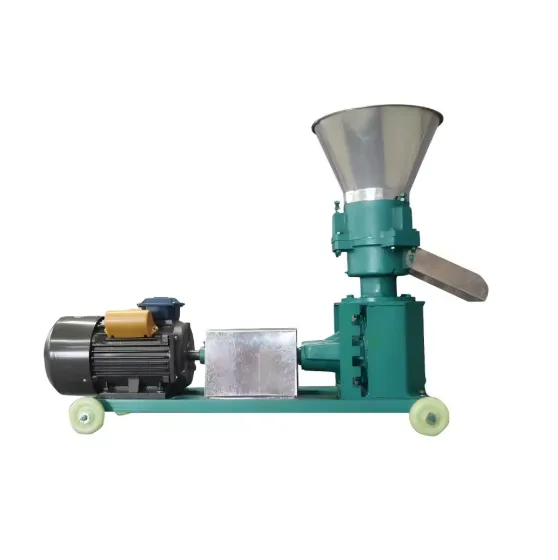
5. Price comparison: China · USA · Europe (typical retail/factory band)
The following table aggregates public listings and marketplace prices observed in late 2025. These are representative ranges; always request updated quotes as costs fluctuate with currency, freight and component shortages.
| Region | Typical FOB / Factory price band (small units) | Notes |
|---|---|---|
| China (factory/B2B sellers) | USD 120–3,500 | Wide range: cheap benchtops up to rugged farm units; factory warranties vary. Many listings on Alibaba, Made-in-China. |
| USA (retail/imported & domestic brands) | USD 400–8,000+ | Retail prices include import duties, local distribution, and higher after-sales support. Consumer units on Amazon and specialty vendors. |
| Europe (import & local suppliers) | EUR 500–10,000+ | Conformance to CE and local standards often raises price; turnkey equipment usually higher due to certification and packing. |
Why China is often cheaper. Factory overheads, local supply chains and scale of production keep unit price low. Buyers should weigh shipping, import taxes and warranty service when choosing a China supplier.
6. Main factors that influence price
-
Die material and geometry: hardened alloy or tool steel dies are costlier but last longer and produce better pellets.
-
Build materials and finish: machined surfaces, precision shafts and higher-grade bearings raise cost. Stainless critical parts increase price for hygiene.
-
Powertrain: branded gearboxes and motors cost more but reduce downtime. Diesel engines add cost and fuel complexity.
-
Capacity and duty cycle: continuous duty machines with higher throughput are more robust and expensive.
-
Included ancillaries: mixers, hammer mills, dryers, coolers and packing lines add substantial cost when bundled.
-
Standards and certifications: CE, ISO and other certifications increase production cost and final price for regulated markets.
-
After-sales service and spare availability: vendors offering local spare stock and technicians often price higher but lower TCO.
-
Shipping, tariffs and MOQ: small orders attract proportionally higher logistics cost; container shipments reduce per-unit freight for bulk.
-
Customization: special dies, pellet sizes, or food-grade surfaces have premium pricing.
-
Brand and dealer margin: name brands with established support networks command premium pricing.
7. Total cost of ownership (TCO) example
A buyer considering a USD 1,500 small farm flat-die unit should budget additional costs:
-
Shipping & duties: USD 150–600
-
Installation & local wiring or mounting: USD 100–500
-
Spare dies and wear parts first year: USD 50–300
-
Routine maintenance (lubricants, belts) first year: USD 100–200
-
Electricity/diesel operating cost per year: depends on hours run. Example below.
Worked rough example (annualized)
Assumptions: machine USD 1,500; shipping USD 300; installation USD 200; first year spares USD 200; expected life 7 years.
-
Upfront: USD 2,200
-
Annualized capital cost (straight line): USD 1,500 / 7 ≈ USD 214
-
Annual maintenance + spares: USD 200
-
Energy and labor per year: USD 600
-
Estimated annual TCO: USD 1,014 plus energy and variable feed costs.
This simplifies many variables. For profitability, calculate feed cost reduction per ton by making pellets in-house and contrast to purchased feed price.
8. Market analysis and outlook (short to medium term)
Global demand for pellet mills is linked to livestock expansion, aquaculture growth and increasing interest in on-farm feed self-sufficiency. Market analyses in 2024–2025 show steady expansion in the pellet mill sector driven by smallholder mechanization and small commercial installations. One analyst projection (industry brief) estimated growth from roughly USD 1.2 billion in 2024 to USD 1.9 billion by 2033, reflecting a moderate compound annual growth rate driven by new feed processing investments.
Key trend drivers:
-
Decentralized feed production: small farms prefer in-house pelletizing to control costs and quality.
-
Automation and smarter controls: even small machines are incorporating sensors, raising unit cost but improving efficiency.
-
Raw material shifts: grain and byproduct price volatility affects feed formulation and machine usage patterns.
-
Sustainability pressure: interest in lower energy and biomass-based feed reduces willingness to buy inefficient models.
-
Regional supply chain realities: OEM lead times and shipping constraints occasionally raise spot prices.
Overall, expect modest price inflation on components (bearings, motors) and continuing availability of low-cost factory units from China while reputational and service advantages will keep retail/dedicated brands relevant in developed markets.
9. How to choose the right machine: procurement checklist
Use this checklist when evaluating suppliers and models:
-
Define target throughput daily/weekly. Match machine capacity with realistic utilization.
-
Specify feed formulations and pellet diameter. Some machines cannot press high-fat or high-fibre mixes.
-
Check die life and spare part availability. Ask for die material specs and lead times.
-
Confirm motor, gearbox and brand; request technical datasheets.
-
Ask about warranty and local service: duration, response time, who pays for shipping of failure parts.
-
Request a video of the machine running with similar raw materials.
-
Obtain a breakdown of included ancillaries and which items are optional.
-
Verify safety features and certifications required by your country.
-
Calculate TCO rather than only up-front price.
-
Negotiate on spare kits and training rather than just price; these add value.
10. Installation, operation and maintenance (what affects lifetime costs)
-
Daily checks: feed inlet, die clearances, lubrication.
-
Wear parts: dies and rollers are consumables; expect periodic replacement depending on hours and raw materials.
-
Power quality: poor electricity increases motor failures. Voltage stabilizers may be necessary.
-
Operator training: poor operation increases die wear and unplanned downtime.
-
Spare parts strategy: maintain a small stock of critical parts to avoid production pauses.
11. Environmental, safety and compliance points that can alter price or acceptance
-
Dust control and emissions: adding dust collectors or enclosed lines raises capital and operating cost but is necessary for worker safety and compliance in many jurisdictions.
-
Food safety: feed used for animals entering the human chain may require stainless contact surfaces and traceability.
-
Noise and vibration: local regulations can require enclosures or reduced operating hours.
-
Energy efficiency: higher efficiency machines cost more but lower operating expenses.
12. Sample vendor categories and purchasing pathways
-
Direct factory buy from China: lowest unit price, best for experienced importers. Check MOQ and shipping terms.
-
Marketplace sellers (Alibaba, Made-in-China): easy to compare listings and request quotes. Watch out for variable quality.
-
Local distributors and brands: higher price but better after-sales support and easier returns. Example consumer listings on Amazon and specialty dealers.
-
Turnkey integrators: when building a small feed plant, integrators supply a matched line with dryer, cooler and packing; the cost is appreciably higher but saves integration risk.
13. Charts and visual aids (textual + one compact ASCII chart)
Below is a simple textual breakdown showing typical price distribution for single units purchased by small buyers (illustrative):
For a buyer group sample, about 40% of small buyers choose sub-USD 500 units for trial or home use while about 30% prefer midrange farm models.
14. FAQs
1. What is the cheapest effective small feed pellet machine?
A reputable single-phase flat die model from China in the USD 120–600 band is usually the cheapest effective option for occasional small batches. Check die material and warranty.
2. Will a mini pellet mill pay for itself?
Payback depends on scale and feed price differential. If you produce several tons per month and reduce feed cost by 10–20% versus bought-in feed, payback can be under 12–18 months. Perform a TCO and savings calculation before purchase.
3. How long do dies and rollers last?
Die life varies with raw materials, hours and die material. Hardened tool steel dies can last months to years under light duty; expect faster wear with abrasive ingredients.
4. Can I use the same machine for fuel pellets and feed pellets?
Technically yes, but cross-contamination of feed and fuel is a food-safety risk. Use dedicated machines or thoroughly clean and inspect when switching purposes.
5. Is a ring die worth the extra price?
If continuous throughput above 600 kg/h and extended life are required, ring dies often justify the higher price due to lower per-ton production cost and better pellet consistency.
6. What spare parts should I order with the machine?
At minimum: a spare die, a spare set of rollers (if applicable), belts, and a small toolkit for adjustments. Ask suppliers for a spare kit.
7. Are there safety certifications I should insist on?
For exported machines, CE is commonly expected in Europe. For food/animal feed contact, request material certificates and ask about surface finish and cleaning procedures.
8. How much does shipping add to price?
For single small machines, airfreight or small parcel shipping can add hundreds of dollars. Full container shipments reduce per-unit freight for bulk buys.
9. How to optimize pellet quality on a small machine?
Control raw material moisture, use the right die hole size, ensure uniform grinding and adequate conditioning (steam or water) if possible, and maintain consistent feed rate.
10. Where can I get reliable service?
Local authorized distributors or third-party agricultural machinery repair shops. If buying direct from overseas, confirm spare-parts availability and service network or partner with a local integrator.
15. Practical buying tips and negotiation levers
-
Request factory videos showing the exact serial machine running your raw material.
-
Negotiate inclusive spare parts and a minimum warranty period.
-
If importing, get Incoterms clarified. FOB vs DDP changes total landed cost.
-
Buy one extra die at the original unit price when ordering to avoid later premium spare pricing.
-
For larger buys, ask for container consolidation discounts.
16. Closing summary and recommended next steps
-
If you are experimenting or producing very small volumes, start with a low-cost flat-die unit and keep realistic expectations about durability.
-
For continuous farm production, choose a midrange flat-die or small ring-die unit; factor in spare dies and local support.
-
For small commercial plants, a packaged solution with a hammer mill, mixer and dryer is preferable; plan for higher initial capital but better product consistency.
Appendix A. Representative supplier examples
-
Alibaba / mini pellet machine listings show units from approximately USD 125–500 for benchtop models.
-
Made-in-China listings range broadly; common small feed pellet machine listings show USD 250–2,800 depending on model.
-
Specialist suppliers and integrators list small units up to 1,100 kg/h with higher price reflecting build and support.