

A properly selected wood pellet dryer is essential to produce durable, low-fines pellets with target moisture near 8–12% for consumer-grade fuel or below 10% for certified pellets; for high throughput plants, a rotary drum dryer typically delivers the lowest capital cost per ton while belt dryers deliver gentler, more uniform drying with lower emissions and higher energy recovery; LansonMachines offers customizable, factory-direct drying systems tuned to feedstock, capacity, and fuel preferences to deliver long-term reliability and strong return on investment.
1. Introduction and why drying matters
Pellet quality depends strongly on feedstock moisture and particle state before pressing. Drying improves pellet durability, raises calorific value per ton, reduces transport weight, and prevents storage and mold problems. Poor drying leads to weak pellets, high fines, blocked dies, and unstable combustion performance. Industry practice targets final pellet moisture that supports mechanical durability while keeping energy use moderate. Proper dryer selection reduces downstream costs and increases line availability.
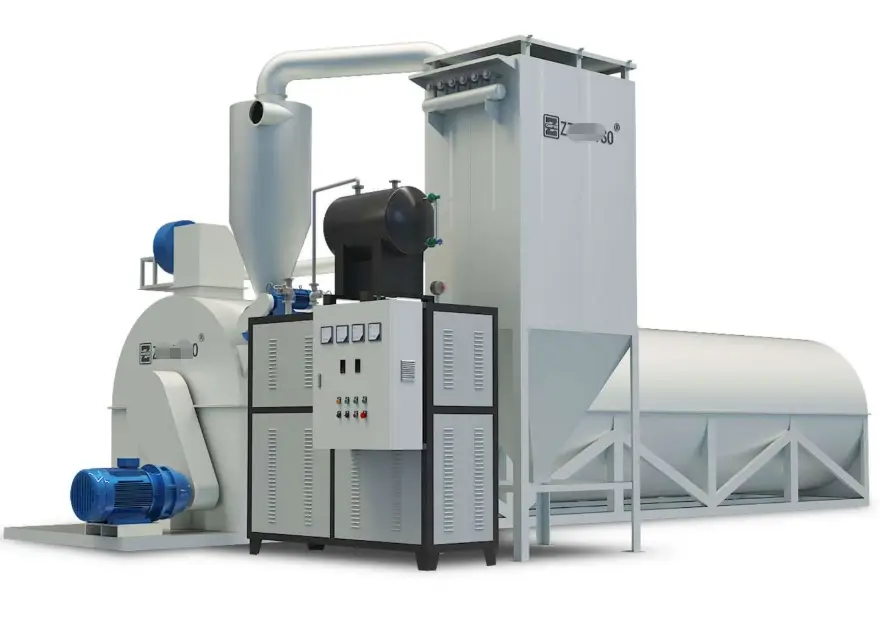
2. Quality targets, standards, and moisture specifications
Most certification schemes and major pellet buyers require final pellet moisture within a narrow range. ENplus and national grading programs set benchmarks for moisture, fines, bulk density, and energy content. For commercial wood pellets, typical final pellet moisture ranges between 8% and 12%; premium and certified pellets commonly target under 10%. Raw sawdust feedstock commonly arrives at 30% to 50% moisture and must be reduced for efficient pelletizing. Monitoring moisture at multiple points — raw feed, pre-dryer, after dryer, and after cooling — ensures consistent product within specification.
3. Main dryer types used for wood pellet production
Below are the primary dryer categories used in pellet systems, with short functional descriptions.
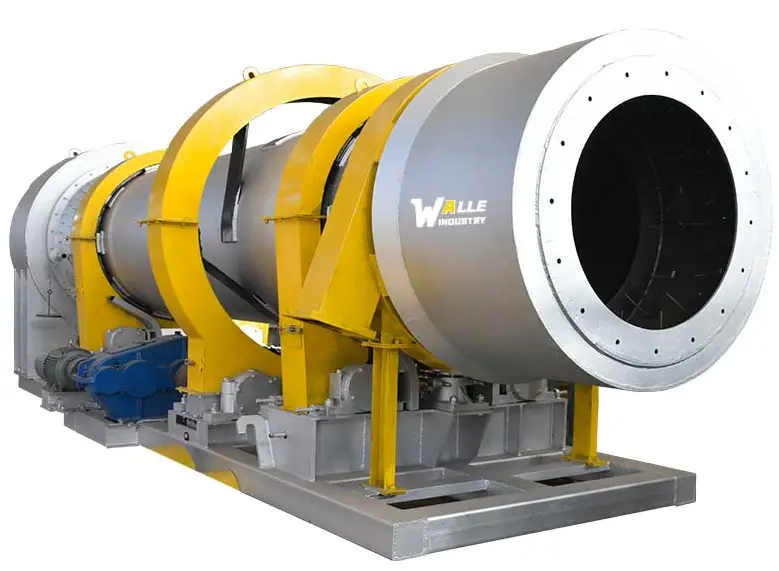
Rotary drum dryer
A rotating cylindrical drum that tumbles raw material while exposing it to hot gas flow. Widely used for mid-to-large throughput because of mechanical simplicity and robust operation. Final moisture typically reaches 10–15% depending on configuration and feed. Many plants in Asia favor rotary drums for cost-effectiveness at scale.
Belt dryer (convective or tunnel dryer)
Conveys material on a moving perforated belt through controlled zones of temperature and airflow. Offers precise, low-temperature drying with good uniformity, efficient heat recovery, and lower particulate emissions. Common in Europe for premium pellet production where emissions and product homogeneity are priorities.
Flash dryer and pneumatic dryers
High-velocity air entrains fine particles; heat transfer occurs rapidly. These dryers suit certain feedstocks and situations with high fines content, but require precise control and strong dust collection to avoid losses. Flash dryers tend to be equipment-intensive and common in plants that combine size reduction and drying in a compact footprint.
Fluidized bed dryer
Fluidizes friable material using large volumes of hot air. Good thermal contact leads to short residence time, but equipment requires careful design to avoid attrition. Efficiency shifts with particle size and moisture distribution.
Tray, drum plus secondary coolers, hybrid systems
Some designs combine drum drying with downstream belt sections or cooling conveyors to optimize finish moisture and pellet temperature prior to storage.
4. Comparative table: dryer types at a glance
| Dryer type | Typical capacity range (ton/hr) | Typical final moisture (%) | Energy and emissions profile | Best use case |
|---|---|---|---|---|
| Rotary drum | 0.5 to 30+ | 10–15 | Moderate fuel use, higher exhaust particulate, easy scale-up | Large throughput, lower capital intensity. |
| Belt dryer | 0.1 to 10+ | 8–12 | Lower emissions, better heat recovery, higher capex | Premium pellets, tight control of product moisture. |
| Flash / pneumatic | 0.5 to 6 | 6–12 | Fast drying, requires strong cyclone/dust control | High-fines feedstocks, compact plants |
| Fluidized bed | 0.5 to 8 | 6–12 | Efficient thermal contact, sensitive to particle size | Controlled, high-quality drying with low residence time |
| Hybrid (drum + belt) | Varies | 8–12 | Tunable to optimize both throughput and quality | Plants needing balance between cost and final quality |
Notes: capacity ranges vary by manufacturer and feedstock bulk density. Final moisture numbers indicate typical achievable values rather than guaranteed limits; final performance depends on design and control strategy.
5. How to choose the right dryer for your plant
Selecting a dryer requires balancing feedstock, targeted product grade, throughput, fuel type, local emissions rules, and capital budget.
Key decision factors
-
Feedstock moisture, particle size, and fines fraction. High initial moisture or variable feedstock calls for robust, tolerant designs.
-
Target pellet quality and certification needs. If certified under ENplus or similar, aim for consistent sub-10% moisture and low fines.
-
Throughput requirement. For very high tonnage, rotary drum units achieve low cost per ton. For medium or premium lines, belt dryers offer better control and energy recovery.
-
Fuel type for heating. Biomass residue, natural gas, heavy oil, or waste heat from other processes all influence dryer choice and combustion system design.
-
Emissions and permitting. Local particulate and CO emission limits push many producers toward enclosed belt systems plus advanced filtration.
-
Layout constraints and maintenance access. Drum dryers are bulky but mechanically straightforward; belt dryers need larger footprints but allow modular zone control.
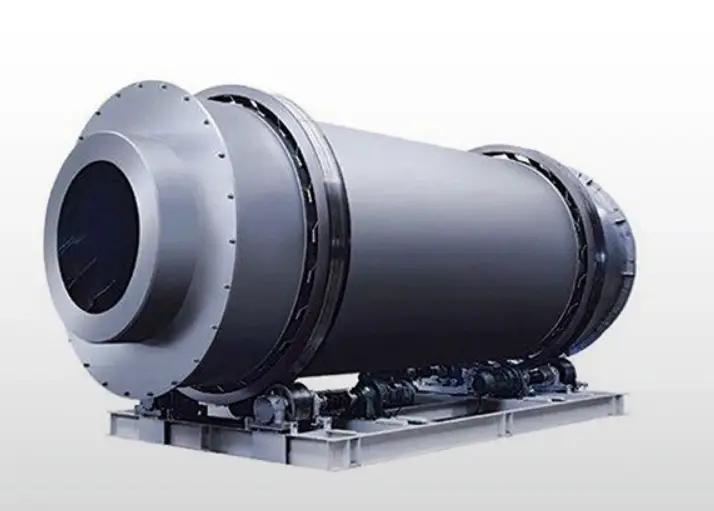
Rotary Wood Pellet Dryer For Biomass Energy Industry
6. Key design parameters and operating set points
A properly engineered dryer sets these variables in concert.
-
Air temperature at entry: depends on dryer type and feed sensitivity. Belt dryers run at lower temperatures while flash dryers use higher temperatures.
-
Residence time: time that material spends in dryer. This controls moisture removal per pass. Adjust via belt speed or drum RPM.
-
Hot gas flow and velocity: must overcome boundary layers and carry evaporated moisture to exhaust. Too high velocity increases carry-over of fines.
-
Heat source capacity: sized to handle worst-case feed moisture. Include margin for higher-than-expected input moisture.
-
Cyclone and filtration design: ensure efficient capture of entrained fines to protect product and meet emissions rules.
-
Control strategy: continuous moisture monitoring is essential. Instruments include online moisture sensors and mass-flow feedback loops. Mettler Toledo application notes and other instrument vendors describe checkpoint locations for moisture testing.
7. Energy efficiency, heat recovery, and emissions control
Energy use is a major operating cost. Several best practices reduce fuel consumption.
Heat recovery
Recover sensible heat from exhaust streams using recuperators, economizers, or secondary belt-stage heating. Some belt dryers operate on low-temperature waste heat streams, improving lifecycle efficiency. Effective heat recovery can reduce operating fuel needs significantly.
Optimizing thermal input
Match heat input to actual drying load. Variable-frequency drives for fans and feed systems let plants reduce energy use under light loads. FEECO technical guidance notes that rotary systems show better electrical energy behavior at partial loads relative to fluid-bed designs.
Emissions and dust control
Install cyclones, baghouses, or electrostatic precipitators sized for the dryer exhaust. Belt dryer configurations commonly yield lower particulate and NOx profiles because of staged low-temperature drying and contained exhaust systems. Local permitting may require continuous emissions monitoring.
8. Integration with pellet line and factory layout considerations
Dryer siting influences overall plant throughput and material handling.
-
Position dryer upstream of hammer mill or screening if raw material is wet chips; drying after milling saves heat if material is coarse, but may increase fines.
-
Conveying between dryer and pellet press often needs cooled, screened product. Cooling conveyors or chillers reduce pellet temperature to safe storage levels.
-
Design storage to protect dried biomass from moisture pickup and contamination, following ENplus storage guidance. Store in covered silos with controlled humidity and intake filtration.
9. Typical problems, maintenance, and mitigation strategies
Common issues include uneven drying, high fines, excessive fuel use, and mechanical wear.
-
Uneven drying: check belt speed or drum slope and internal lifter arrangement. Calibration of airflow distribution resolves many issues.
-
High fines: can result from over-drying, aggressive mechanical handling, or improper screen/cyclone sizing. Reduce residence time or adjust temperature profile.
-
Blocked cyclones, buildup in ducts: schedule routine inspection and include access ports.
-
Wear in drums: select abrasion-resistant liners and monitor for wear patterns. Regular bearing inspection and alignment keep downtime low.
-
Instrument drift: maintain moisture sensors with scheduled calibration against lab analysis. Mettler Toledo outlines checkpoint points and lab validation frequency.
10. Capital and operating cost considerations with sample numbers
Below is an illustrative overview. Prices and energy figures vary based on region, fuel, and vendor.
Capex categories
-
Dryer equipment and burners or heat source
-
Air handling, cyclones, baghouse filtration
-
Material handling conveyors, feeders, and silos
-
Controls and instrumentation
-
Installation and civil works
Sample capital ranges (indicative)
-
Small belt dryer line (0.5–2 ton/hr): medium capex, likely tens to low hundreds of thousands USD.
-
Medium rotary drum line (1–5 ton/hr): capex in the low to mid hundreds of thousands USD.
-
Large rotary plant (10+ ton/hr): capex multiple hundreds of thousands to over 1 million USD depending on complexity. Pricing listings on global supplier platforms show wide market variation; factory-direct sourcing helps lower markup.
Energy consumption and operating cost
Energy per ton depends on moisture removed and dryer efficiency. A rough engineering estimate for sensible heat to evaporate one kilogram of water is about 2.26 MJ per kg; practical systems need more due to inefficiencies. Implementing heat recovery and staged drying reduces net fuel per ton. FEECO technical references discuss how rotary designs often require less electrical energy at partial load than fluidized designs.
11. Technical checklist for procurement and factory testing
When buying a dryer, require these items in the technical bid:
-
Guaranteed throughput at specified inlet and outlet moisture values.
-
Guaranteed final moisture uniformity and specification compliance for pellet use or certification.
-
List of materials of construction and wear parts, plus expected maintenance intervals.
-
Burner or heat source specifications including expected fuel types and consumption curves.
-
Controls architecture and remote diagnostics capability.
-
Emissions and filtration guarantees.
-
Test plan: vendor should provide factory acceptance tests with defined inlet moisture, measured outlet moisture, power draw, and emissions sampling. Document lab verification procedure for moisture with a recognized moisture measurement method.
12. Appendix: sample rotary drum dryer specification table
| Parameter | Example value |
|---|---|
| Model | RD-2000 |
| Capacity (wet feed) | 2–3 t/h (35% to 10% final) |
| Drum diameter | 2.0 m |
| Drum length | 12 m |
| Motor power (drum) | 30 kW |
| Burner capacity | 300 kW (depending on fuel) |
| Final moisture | 10–12% |
| Exhaust filtration | Cyclone + baghouse |
| Estimated fuel use | Depends on inlet moisture and fuel type; typical engineering estimate required per project |
Note: Use this table to benchmark vendor quotes; confirm actual measured performance during factory acceptance testing.
13. Frequently asked questions
-
What final moisture should I target for residential pellet fuel?
Typical target is between 8% and 12%, with many certified products aiming for under 10%. Monitor durability, fines, and combustion performance when setting the exact target. -
Which dryer type gives the best energy efficiency?
Belt dryers with integrated heat recovery usually provide the best lifecycle energy performance for premium pellet production; rotary drums can be efficient at scale when paired with economizers. -
Can I use waste heat from my boiler to run a dryer?
Yes. Low-temperature waste heat suits belt dryers particularly well. Systems should include controls to handle variable heat input. -
How much will drying add to pellet production cost per ton?
Operating cost depends on moisture removed and fuel price. Heat recovery and efficient controls can lower the incremental cost significantly. Request vendor heat-balance calculations for precise numbers. -
Is a rotary drum dryer suitable for variable feedstock?
Yes. Rotary drums tolerate variation in moisture and particle size and are common where feedstock quality fluctuates. -
How important is cooling after pelleting?
Cooling locks the pellet structure and reduces moisture migration. Insufficient cooling leads to soft pellets and higher fines during handling. Cooling conveyors or aerated coolers are common. -
What emissions controls do I need for a dryer?
Cyclones plus baghouses provide particulate control. Local regulations may demand additional NOx, CO, or VOC limits; plan for continuous emissions monitoring where required. -
How should I measure moisture to confirm dryer performance?
Use both online sensors and periodic lab oven tests. Place measurement points at raw feed, dryer outlet, and post-cooler to verify consistency. Mettler Toledo and similar instrument vendors provide recommended checkpoint strategies. -
Can drying create fire risk?
Yes. Elevated temperatures, dust, and fines raise fire and explosion risk. Implement explosion vents, spark detection, and strict housekeeping. Follow industry safety standards during design. -
How does pellet certification influence dryer choice?
Certification criteria for moisture, fines, and durability push producers toward dryers that give uniform, controlled low-temperature drying, often favoring belt systems when budgets allow.
Final recommendations tailored to LansonMachines
-
For customers seeking high throughput with strong capital efficiency, offer modular rotary drum dryers with staged heat recovery and robust filtration, plus optional variable-speed drives for better partial-load efficiency.
-
For premium product lines and regulated markets, propose belt dryer systems with residual-heat operation and multi-zone control to meet sub-10% moisture consistently.
-
Provide factory acceptance testing with clear performance metrics: inlet and outlet moisture, kilojoules or kWh per kilogram of water removed, particulate emission concentration, and mechanical durability of pellets. Include spare parts and a maintenance training package.