

If your goal is reliable, low-cost production of grass pellets for animal feed or biomass fuel, invest in a purpose-built grass pellet making machine sized to your throughput and raw material type, paired with proper preprocessing (size reduction and drying). For most small to medium farms, a flat-die pellet mill with a hammer mill and a dryer gives the best return on investment. For larger commercial plants, a ring-die mill and integrated feed system deliver higher capacity and better long-term efficiency. LansonMachines supplies both compact and production-scale lines at factory pricing and offers customization for feedstock and local power sources.
1. What a grass pellet making machine is and why it matters
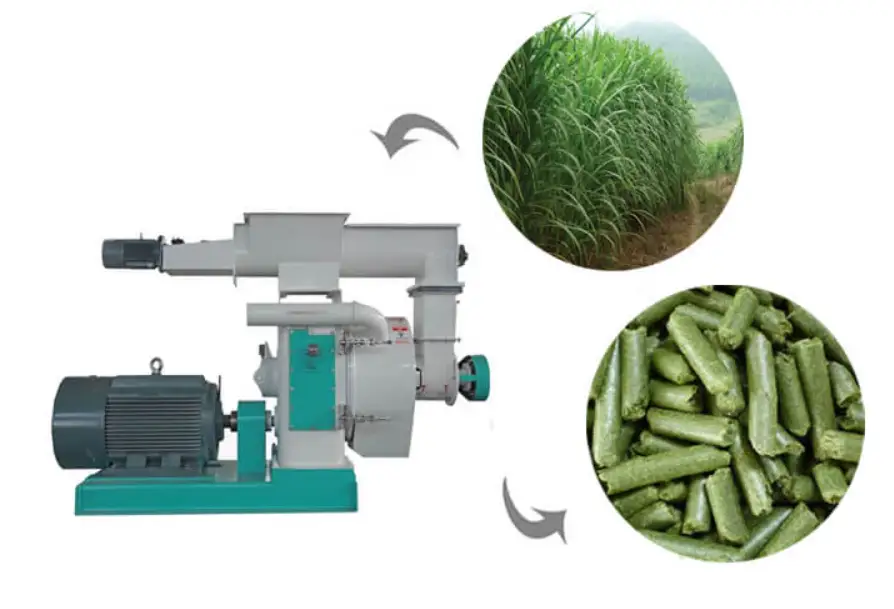
A grass pellet making machine compresses chopped and conditioned grasses, herbages, or forage into cylindrical pellets using pressure and heat generated inside a pelletizing chamber. Pellets create a dense, uniform product that is easier to transport, store, and meter than loose cut grass. They serve two primary markets: animal feed (for ruminants, horses, rabbits) and biomass fuel for small-scale heating or industrial use.
Key benefits include extended shelf life, reduced volumetric storage, consistent dosing in feed applications, and higher energy density for fuel. Reliable pelletizing reduces harvest waste and enables value-added sales from otherwise low-value forage.
2. Applications and market uses
Grass pellets fit several business models:
-
On-farm feed production for cattle, sheep, goats, horses, and game. Pellets allow measured rations and winter feed reserves.
-
Commercial feed mills producing balanced rations by blending grass pellets with concentrates.
-
Biomass energy: pellets burned in pellet stoves or furnaces for heating, or co-fired at facilities.
-
Export-grade forage: processed grass that can be palletized and shipped to markets with forage shortages.
Producers often choose between selling finished pellets or integrating value-add steps like nutrient fortification, packaging, and branding.
3. Key machine types and their tradeoffs
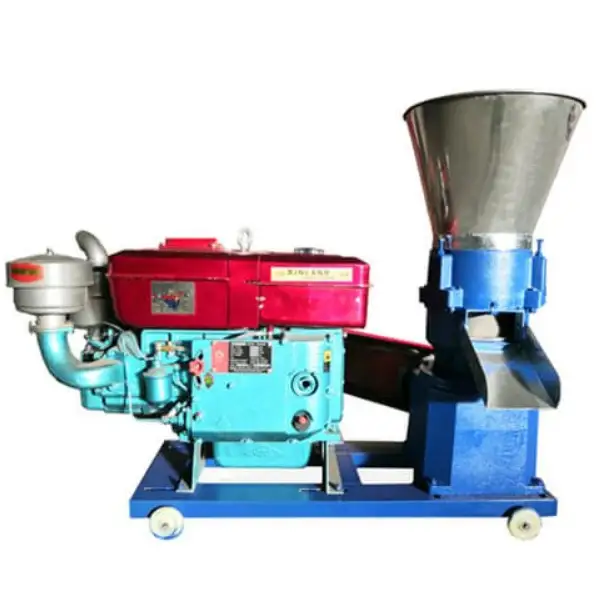
Two main pellet mill configurations dominate the market: flat-die and ring-die. Each suits different scales and feedstocks.
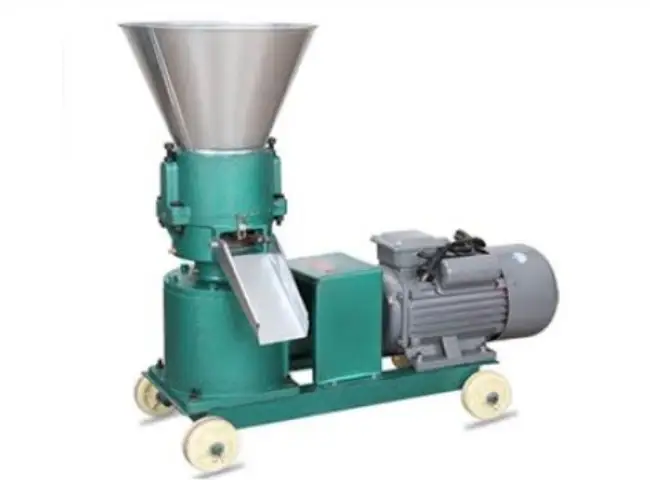
Flat-die pellet mills
-
Best for low to medium production up to roughly 500 kg/h depending on motor size.
-
Simple construction, lower capital cost, easier maintenance, suitable for small farms and pilot operations.
-
More frequent die replacement if used at high throughput.
Ring-die pellet mills
-
Designed for medium to high production, often 500 kg/h up to multiple tonnes per hour.
-
Better for continuous operation and harder feedstock mixes.
-
Higher initial cost but more robust for commercial plants.
Flat-die models are common for mixed forage and small operations while ring-die machines are the backbone of industrial pellet plants. Major mill manufacturers and OEMs supply both formats with varied die geometries and conditioning options.
4. Raw material requirements and preprocessing steps
Pellet quality depends primarily on feedstock preparation. Typical steps and target parameters include:
-
Sorting and cleaning: Remove stones, metal, and large contaminants.
-
Size reduction: Hammer mill or shredder reduces particle size; target <3–6 mm depending on pellet diameter.
-
Moisture control: Ideal feed moisture often ranges from 10% to 16% for grass-based materials; certain high-lignin grasses tolerate slightly lower humidity. Drying systems (belt dryers or rotary) may be required for freshly cut wet grasses.
-
Conditioning: Steam or hot water conditioning for some feed types helps soften fibers and activate natural binders. For grass feedstock with lower lignin, small binders or molasses may be used for pellet stability.
Proper preprocessing reduces die wear, lowers rejection rates, and improves bulk density. The particle size guideline and the need for drying are standard across suppliers and equipment guides.
5. The pelletizing process explained, step by step
-
Feeding: Preprocessed material is metered into the pellet mill via an auger or forced feeder.
-
Conditioning (optional): Steam or hot air can be applied to the chamber to raise temperature and make fibers plastic.
-
Compression: Material is forced through die holes by rollers (flat-die) or roll packs (ring-die), creating frictional heat.
-
Extrusion: Pellets leave the die face as continuous rods that are cut to length by a knife.
-
Cooling: Immediately after production, pellets retain heat and moisture; a counterflow cooler sets their shape and reduces fragility.
-
Screening and storage: Broken fines are removed by screens, then pellets are stored in bulk or packed into bags.
Each step affects final pellet durability and density. For example, insufficient cooling increases friability, while poor cutting leads to inconsistent lengths.
6. Sizing a system: capacity, power, and footprint
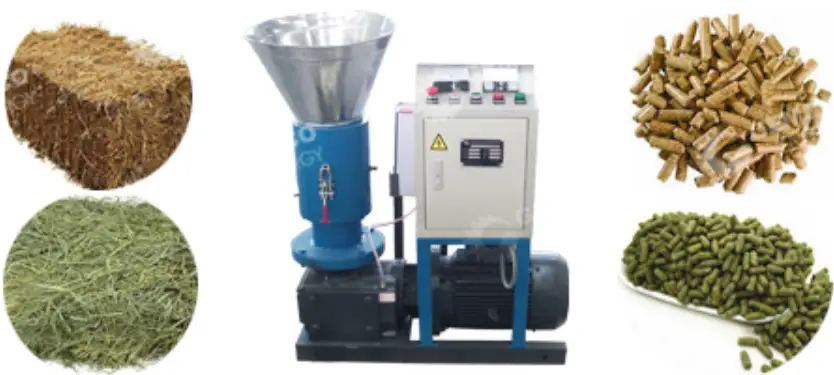
Select system size by estimating daily production and factoring operating hours. Typical capacity classes and approximate motor sizes are:
| Capacity class | Typical output range (kg/h) | Typical drive options |
|---|---|---|
| Small | 50–300 kg/h | 7.5–22 kW electric or small diesel/PTO. |
| Medium | 300–1000 kg/h | 22–75 kW three-phase electric or medium diesel. |
| Large | 1–5+ t/h | 75 kW and above; ring-die mills, industrial gearboxes. |
Drive choices include electric motor, diesel engine, gasoline engine, or PTO for tractor-tied installations. For remote farms without stable grid power, PTO and diesel variants are common. Suppliers list rated capacities but actual throughput depends on feedstock, die size, and preprocessing quality.
7. Typical costs and ROI considerations
Purchase price depends on machine type, capacity, and included accessories (hammer mill, dryer, cooler, conveyor, packing). Market listings show a broad range:
-
Home or small-scale pellet machines: several hundred to a few thousand dollars.
-
Medium flat-die systems with feeder and basic ancillary equipment: typically in the mid thousands to low tens of thousands.
-
Full production lines with ring-die mills, dryers, and automation: tens of thousands to multiple hundreds of thousands.
A realistic price band for single grass pellet machines on global wholesale platforms ranges from approximately $7,500 up to $90,000 for industrial units, depending on capacity and features. Operating economics should include energy consumption, labor, raw material costs, spare parts (dies and rollers), and packaging. Typical payback periods vary widely, often 1–3 years for well-run farm operations that replace bought feed or enter niche markets. Price data and FOB quotes are available from multiple manufacturers and marketplaces.
8. Installation, operation, and maintenance best practices
-
Site: Solid, level foundation with dust control and easy access for raw material delivery and finished pellet removal.
-
Operator training: Proper feeding control, monitoring temperature and sound, die speed, and lubrication.
-
Routine maintenance: Regular die and roller inspection, lubrication schedules, belt and gearbox checks, and timely replacement of wear parts.
-
Spare parts planning: Keep at least one spare die and a roller set on hand for continuous operation.
-
Safety: Dust collection, guards on moving parts, emergency stop circuitry, and lockout procedures during maintenance.
Proactive maintenance reduces downtime and improves pellet quality.
9. Quality control and pellet specifications
Important physical characteristics and typical targets:
-
Diameter: Usually 6 mm to 12 mm; 6–8 mm common for animal feed, 8–12 mm for fuel.
-
Length: Cut pellet length typically 10–30 mm depending on application.
-
Bulk density: For grass pellets, 450–650 kg/m³ is typical after cooling and packing.
-
Durability: Measured by tumbling tests; higher is better for handling and transport.
-
Moisture after cooling: Aim for 8–12% to avoid mold and degradation.
Quality assurance often includes periodic lab tests for nutrient content (for feed), ash, and calorific value (for fuel).
10. Environmental and safety considerations
-
Dust and explosions: Biomass dust can pose respiratory and combustible risks. Implement proper dust collection, housekeeping, and explosion protection where required.
-
Emissions from drying: Use clean combustion or electric dryers and ensure local regulations are met.
-
Sourcing: Sustainable harvest practices and responsible feedstock sourcing maintain long-term operation viability.
Local regulations may require permitting for larger-scale pellet plants.
11. Purchasing checklist for buyers
-
Confirm capacity rating under your specific feedstock.
-
Ask for power consumption figures at different loads.
-
Request references from customers who pelletized similar grasses.
-
Verify warranty, spare part availability, and lead times.
-
Confirm ancillary equipment included: hammer mill, dryer, cooler, conveyors, control cabinet.
-
Check after-sales support and training options.
LansonMachines offers factory pricing and can provide tailored lines for specific grasses, power supplies, and capacity needs.
12. Comparison tables
Table 1. Flat-die vs Ring-die at a glance
| Feature | Flat-die mills | Ring-die mills |
|---|---|---|
| Typical use | Small to medium farms | Medium to industrial plants |
| Throughput | Up to ~500 kg/h typical | Hundreds kg/h to multiple t/h |
| Capital cost | Lower upfront | Higher upfront |
| Maintenance | Easier for small operators | Longer-run durability, more complex |
| Best for | Lower budgets, variable operation | Continuous high-volume production |
Table 2. Typical system components for a medium grass pellet line
| Component | Purpose | Notes |
|---|---|---|
| Hammer mill | Size reduction | Match screen size to pellet die |
| Dryer | Moisture control | Belt or rotary dryers common |
| Pellet mill (flat or ring) | Pelletizing | Die/roller set critical wear parts |
| Cooler | Pellet setting and drying | Counterflow coolers preferred |
| Screener | Remove fines | Return fines to feed or reprocess |
| Conveyor and bagging | Handling and packaging | Automated bagging shortens labor |
13. Frequently asked questions
1. Can I pelletize fresh cut grass without drying it first?
Not reliably. Fresh-cut grass often contains high moisture. Drying or partial drying to the recommended moisture range (roughly 10–16% depending on feedstock and mill) improves pelleting and reduces die clogging. Small-scale operations sometimes air-dry windrowed material before milling.
2. What pellet diameter should I choose for cattle feed?
A 6–8 mm diameter works well for most cattle and sheep rations. Larger diameters up to 10 mm are used for larger ruminants or for bedding/fuel applications.
3. How often do dies and rollers need replacing?
Lifespan depends on feedstock abrasiveness and operating hours. With tropical grasses and high-sand contamination, wear accelerates. Plan for periodic inspection and have a spare die available. Proper feed cleaning lengthens service life.
4. Can grass pellets replace hay completely?
Grass pellets can substitute for some hay rations but may require changes to ration formulation and water delivery. Pellets are denser and more concentrated, so nutritional balancing is important. Consult an animal nutritionist for complete substitution.
5. What fuel is needed to run a medium pellet mill?
Most medium industrial mills run on three-phase electric power. For remote farms, diesel engines or PTO drive from a tractor are common. Match the motor size to the manufacturer’s recommended rating for intended throughput.
6. How do I improve pellet durability?
Control moisture, ensure correct particle size, use proper conditioning, and allow adequate cooling time. For low-lignin grasses, mild binders (molasses) can help.
7. What are typical production costs per tonne?
Costs vary widely by energy price, labor, and scale. Major cost components are electricity/fuel for drying and pelletizing, amortized equipment cost, and consumables. Request a case-specific operating cost analysis from a supplier or consultant.
8. Are grass pellets suitable for export?
Yes if they meet moisture and contamination standards. Proper packaging and fumigation procedures may be required depending on destination country rules.
9. Is a pellet mill safe to operate?
Yes with correct safeguards: dust collection, emergency stops, training, and lockout-tagout during maintenance.
10. How soon can I expect payback?
Range is typically 1–3 years for farm operations that displace purchased feed or enter specialized markets. Large commercial lines have longer capital cycles but better per-unit margins.
LansonMachines product positioning
LansonMachines supplies grass pellet making machines at factory prices with customization services for different grasses, power types, and capacities. We provide pre-sale process evaluation and post-sale training so customers achieve stable pellet quality quickly.