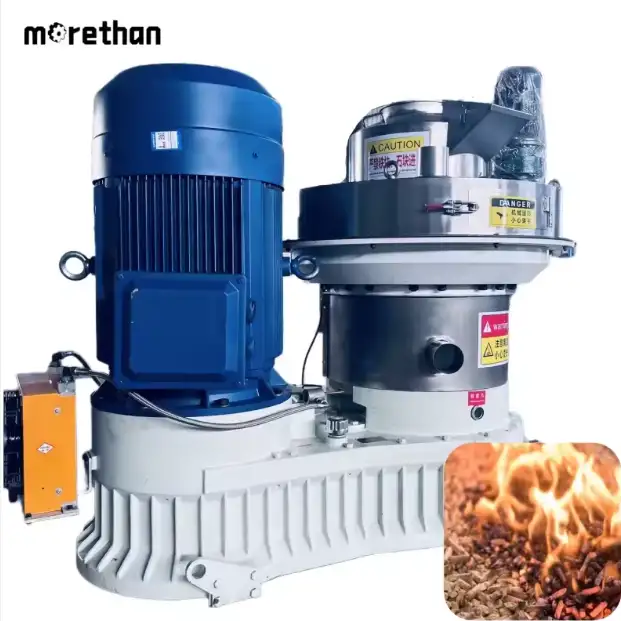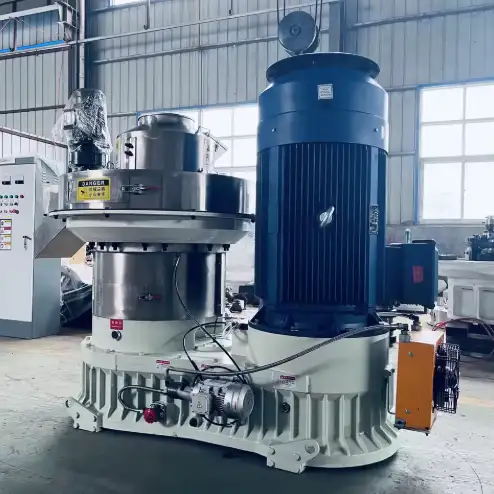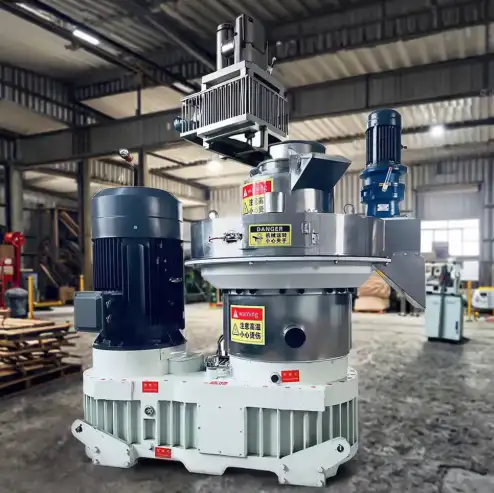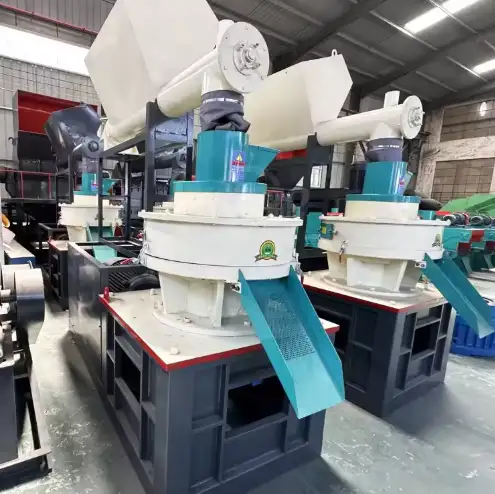

If you need a compact pellet machine that produces between 100 and 150 kilograms per hour, a flat die biomass pellet mill is a practical and economical solution for small commercial runs or farm-level fuel and feed production. Flat die units in this capacity band deliver dependable throughput with lower purchase and service cost than ring die systems, require modest electrical power, and perform best when the feedstock is milled to small particle size and conditioned to the right moisture window.
Key attributes
| Raw Material | Grass, Rice Husk, Biomass, Straw, Wood Sawdust, Cotto… | key selling points | Competitive Price |
| core components | Motor, Gearbox, Pellet Die, Roller | voltage | 220V-10KV |
| warranty | 1 Year | machinery test report | Provided |
| video outgoing-inspection | Provided | place of origin | Henan, China |
| motor power (kw) | 20kw | brand name | Lanson |
| dimension(l*w*h) | 160*80*140cm | Capacity | 100-150kg/ Per Hour |
| Working Life for Die | 2500-3000Hours | Working Life for Rollers | 1500-2000Hours |
| Color | Customer Required | Pellet diameter | 2-8mm |
| Material for making wood… | Wood Shaving Straw | Raw material | Peanut Shell |
| Application | Make Biomass Pellets | Usage | Biomass Energy Industry |
1. Key specifications summary
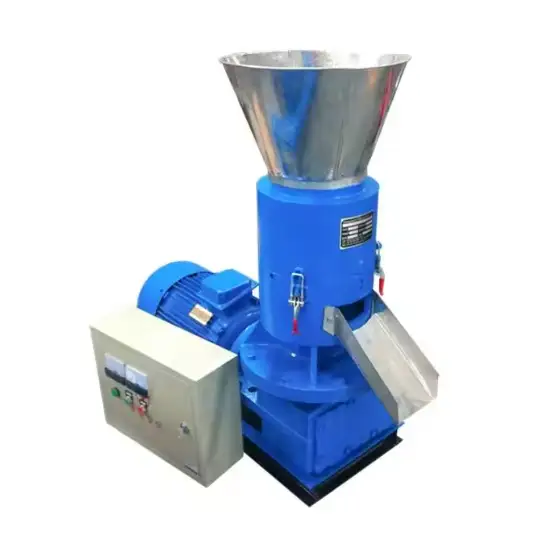
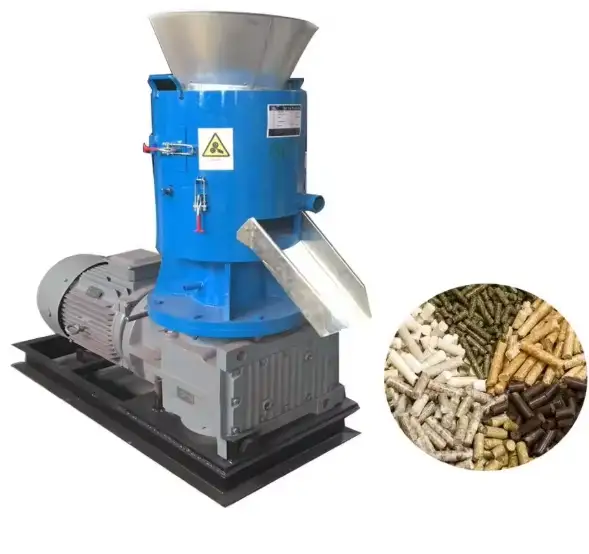
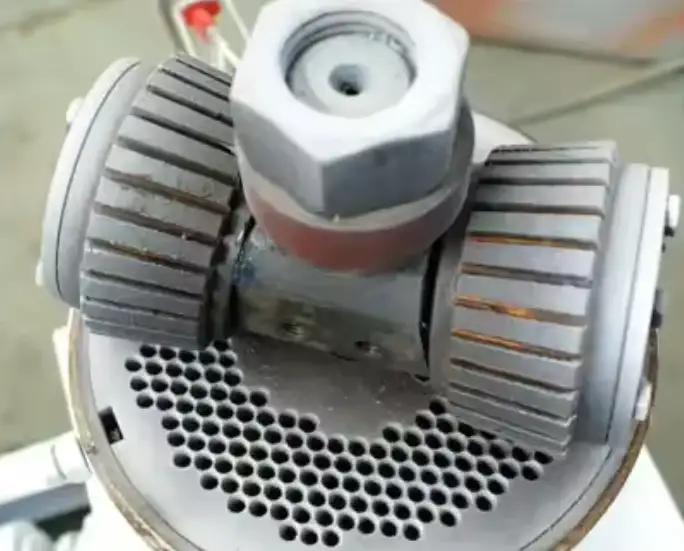
This category of pellet machine is tuned to small commercial volumes. Typical production is 100–150 kg per hour, driven by motors in the 3.7 to 7.5 kW range depending on model and feedstock characteristics. Flat die units include a rotating die plate, rollers, a hopper, a cutter and a baseframe. They compress biomass powders into pellets sized 6 mm to 12 mm, with die thickness and hole diameter selected for target pellet diameter and density.
2. How a flat die pellet mill works, step by step
-
Feeding, where chopped or milled biomass enters the hopper.
-
Metering, the material makes contact with the rotating flat die.
-
Compression, pressure rollers force material into die holes.
-
Lignin activation and shaping, friction raises local temperature, plasticizing natural lignin that binds particles.
-
Cutting, an adjustable knife trims pellets to length at the die exit.
-
Cooling and screening, pellets exit warm and soft; a cooler and screen reduce fines and stabilize product.
This process relies on correct particle size and moisture. If either is poor, throughput and pellet quality drop, and roller/die wear accelerates. Practical setups include a hammer mill before the pellet mill and a cooler after it.
3. Typical technical specification table for a 100–150 kg/h unit
| Item | Typical value |
|---|---|
| Rated capacity | 100–150 kg/h |
| Recommended pellet diameters | 6 mm, 8 mm, 10 mm |
| Main motor power | 3.7 kW to 7.5 kW (model dependent) |
| Drive type | Belt drive or gear drive |
| Flat die diameter | ~140–150 mm |
| Die thickness | 20–30 mm |
| Feedstock examples | Sawdust, wood chips, straw, rice husk, peanut shell |
| Typical moisture of feedstock before drying | 10–15% (best results in the 10–13% band) |
| Typical weight of unit | 200–450 kg |
| Warranty for core parts | 6–12 months, model dependent |
4. Raw material compatibility and preparation checklist
Flat die mills accept many biomass types that have some natural lignin or binder potential. Common feedstocks include softwood and hardwood sawdust, planer shavings, straw, rice husk, and shells. For reliable operation do the following:
-
Remove contaminants: metal, stones and plastic must be screened out.
-
Grind to uniform particle size: target under 3–5 millimeters.
-
Condition moisture to target band (see next section), drying where needed.
-
Blend materials to even composition if mixing feedstocks.
A hammer mill placed upstream provides consistent particle size, and a magnetic separator reduces the risk of die damage.
5. Optimal moisture and particle-size targets for consistent pellets
Most operational guidance and research point to a feed moisture range centered between 10 and 15 percent for pellet forming. Research shows pellet physical properties vary with moisture, and many producers target roughly 10–13 percent for robust durability and density. Quality standards for some solid biofuels require final pellet moisture under roughly 10 percent, so aim to produce slightly drier finished pellets by including cooling and short storage.
Particle-size distribution matters. Larger particles reduce contact area and increase frictional wear; milling to a fines-dominant mix under 3 mm greatly improves pellet consistency.
6. Electrical power, drive options, and real-world energy use
Drive options include belt drive and gear drive. Belt drives are simple and cost efficient. Gear drives reduce slippage and can slightly improve energy transfer in continuous commercial use. Typical motor sizing for this capacity band ranges between 3.7 kW and 7.5 kW depending on material hardness and moisture. For planning, add an allowance for auxiliary systems: hammer mill, dryer, cooler and cyclone, which can double the electrical demand of the pelletizing step in complete lines.
Practical notes:
-
Measure running amp draw under load to confirm supply adequacy.
-
Use soft-start or VFD for controlled ramp and lower mechanical shock.
-
Account for dryer power if moisture needs reduction before pelleting.
7. Pellet quality factors: density, durability, heating value, fines
Pellet quality depends on feedstock, pressure, temperature and residence time. Main metrics:
-
Bulk density, higher density improves transport and combustion stability.
-
Durability, resistance to breakage measured by tumbling tests.
-
Fines percentage, too many fines indicate cutting or brittle pellet formation.
-
Calorific value, varies by feedstock; hardwood and dense agricultural residues often yield better heating value.
Controlling moisture and using appropriate die-hole geometry are two immediate levers to influence these metrics.
8. Maintenance plan and wear parts with lifetime expectations
Wear parts include the flat die and pressure rollers. Typical replacement intervals depend on feed quality and operating hours. With well-conditioned, clean material, a die can run hundreds to thousands of hours; contaminated or very abrasive materials shorten this drastically. Recommended maintenance schedule:
| Interval | Task |
|---|---|
| Daily | Clean hopper, remove dust buildup, inspect cutter knife |
| Weekly | Inspect die surface, check roller clearance and bearing grease |
| Monthly | Check gearbox oil level, inspect belts and pulley alignment |
| As needed | Replace die or rollers when wear causes throughput drop or poor pellet quality |
Stock spare die and roller sets for minimal downtime. Using higher-quality steel dies or hardfacing can lengthen service intervals.
9. Installation, layout and footprint planning
A compact pellet line with a flat die machine fits into a small workshop. Typical footprint for a simple line (hammer mill, pellet mill, cooler, cyclone) is between 6 and 15 square meters depending on arrangement. Consider these layout points:
-
Place hammer mill and pellet mill close to reduce transfer loss.
-
Provide space for a rotary dryer if wet feedstock will be used.
-
Include dust collection and a cyclone to reduce airborne particulate.
-
Provide easy access for die changes and roller inspection.
Plan for proper floor loading and a clean electrical distribution panel near the main machine.
10. Safety, dust control and explosion mitigation
Biomass dust is combustible. Implement these controls:
-
Use cyclones and bag filters to capture airborne dust.
-
Install explosion-proof motors and electrical equipment in high-dust zones if mandated locally.
-
Avoid open flames and hot work near storage or process areas.
-
Provide grounding and bonding for metal components to reduce static buildup.
Training workers to manage blockages and never use open fingers or hands in the hopper are core safe work rules.
11. Cost breakdown and return on investment scenarios
Costs vary by quality and options but typical purchase brackets for a new 100–150 kg/h flat die pellet machine fall into a low capital range compared with ring die systems. Budget components to estimate:
-
Base machine price (flat die unit): low-to-mid range, often substantially less than a ring die of comparable throughput.
-
Pre-processing equipment (hammer mill, dryer): can equal or exceed machine cost if drying is needed.
-
Post-processing (cooler, screener, packaging): modest additional expense.
-
Spare parts inventory and tools: small but necessary.
Estimate payback by calculating pellet sale price times daily production minus running costs. Many users reach payback in months to a few years depending on local fuel prices and utilization.
12. Comparison: flat die versus ring die for this capacity band
For 100–150 kg/h production the flat die format is usually the better match. Key points:
-
Capital cost, flat die is lower.
-
Maintenance, flat die disassembly and spare part replacement tend to be simpler.
-
Throughput, ring die is typically better at larger industrial scales, but for small commercial volumes the difference is not decisive.
-
Final pellet consistency, ring die can edge ahead at scale, but flat die yields excellent pellets when feed preparation is correct.
If planning growth past several hundred kilograms per hour, evaluate ring die units for future scaling.
13. Procurement checklist for buyers and purchasing templates
Before buy, confirm these items with the supplier:
-
Guaranteed throughput at your feedstock and target pellet diameter.
-
Complete technical sheet with motor power, die size, RPM and unit weight.
-
Spare part list and expected lead times.
-
Warranty coverage and local service options.
-
Shipping terms, packaging, and any required pre-shipment testing.
Use an acceptance test: run the machine on your own feedstock at the supplier or locally before final payment.
14. Practical tables
Table A. Feedstock suitability quick matrix
| Feedstock | Typical need for drying | Special notes |
|---|---|---|
| Softwood sawdust | Sometimes | Lower density, good lignin for binding |
| Hardwood sawdust | Sometimes | Harder particles, may need finer milling |
| Straw | Usually | Lower lignin, may need binder or higher pressure |
| Rice husk | Often | Abrasive, increases die wear |
| Peanut shell | Often | Higher oil content, can aid binding |
Table B. Pre-processing equipment checklist
| Item | Purpose |
|---|---|
| Hammer mill | Reduce particle size to <3–5 mm |
| Rotary dryer | Lower moisture to 10–13% band |
| Magnetic separator | Remove metal contaminants |
| Cyclone + filter | Dust control and recovery |
| Screw conveyor | Controlled feed from hopper |
Table C. Simplified ROI example (illustrative)
| Parameter | Value |
|---|---|
| Production rate | 120 kg/h |
| Operating hours/day | 8 |
| Daily output | 960 kg |
| Pellet sale price/kg | $0.12 |
| Daily revenue | $115.20 |
| Estimated electricity and consumables/day | $20 |
| Gross margin/day | $95.20 |
| Days to recoup $6,000 machine cost | ~63 days (under ideal assumptions) |
Real projects should use local pricing and include pre-processing capital.
15. Frequently asked questions
-
What feed moisture should I aim for before pelleting?
Aim around 10 to 13 percent moisture for consistent pellet density and durability. Drier final pellets help with storage and combustion. -
Can I run agricultural residues like straw or rice husk?
Yes, but expect higher wear and sometimes lower pellet durability. Mix with wood sawdust, or add a small binder if needed. -
How often should I replace the die and rollers?
Replacement depends on feed cleanliness and abrasiveness. For clean sawdust, dies can last many hundreds of hours; for abrasive residues expect shorter life. Keep spare dies on hand. -
Is a flat die pellet mill noisy?
Noise is moderate and depends on drive and hammer mill operation. A well-maintained enclosure reduces perceived noise. -
Do I need a dryer for sawdust?
If incoming humidity is above roughly 15 percent, a dryer will improve throughput and pellet quality. Many operations include a rotary drum dryer. -
What is the ideal pellet diameter?
For fuel, 6 mm to 10 mm is common. Choose according to burner or biomass stove feed requirements. -
How much electricity will the pellet mill use?
The pelletizing step uses roughly 3.7–7.5 kW on typical units. Full line electrical use can be larger when including hammer mill and dryer. -
Flat die or ring die, which one should I buy?
For 100–150 kg/h the flat die is cost effective and easier to maintain. For larger throughputs ring die becomes more efficient. -
How do I test pellet durability?
Use a standard tumbler test or industry durability test to measure percent mass retained; many buyers require certified durability thresholds. -
What safety measures are essential?
Install dust collection, avoid ignition sources, implement grounding and explosion relief or suppression where required.
Closing notes for engineers and buyers
Selecting the right flat die pellet machine requires matching technical specs with real feedstock properties. Confirm material moisture and particle size before purchase. Ask suppliers for an on-site trial or sample production using your own raw materials. If your plan includes scaling beyond small commercial volumes, evaluate ring die systems early so that future expansion can be planned with minimal disruption. For procurement, insist on clear performance guarantees and an agreed acceptance test using your feedstock.