

Starting a wood pellet business is feasible and potentially profitable when you align a reliable raw material supply, the right pelletizing equipment, strict quality control, and a sales channel that matches your product grade. For most entrepreneurs, beginning with a small to medium scale plant (0.5 to 3 tons per hour) allows manageable capital outlay, faster break-even, and localized market penetration. With careful planning for feedstock logistics, energy usage, and certifications, a pellet plant can turn low-value biomass into a marketable energy product with margins that improve with scale and process optimization. LansonMachines offers competitive, factory-direct pellet mills that can reduce equipment capital by an appreciable percentage relative to reseller pricing.
1. Market snapshot and buyer profiles
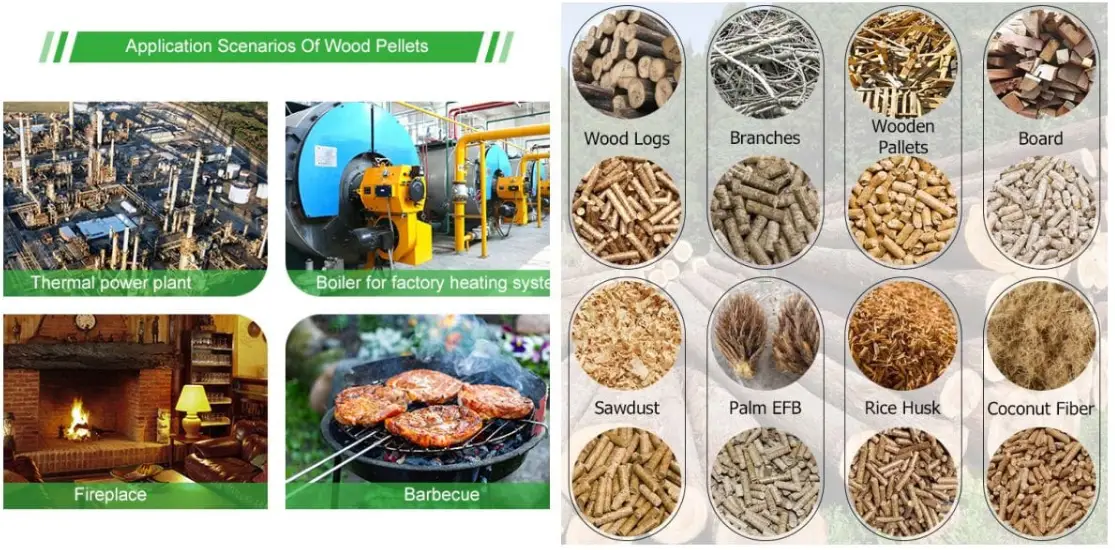
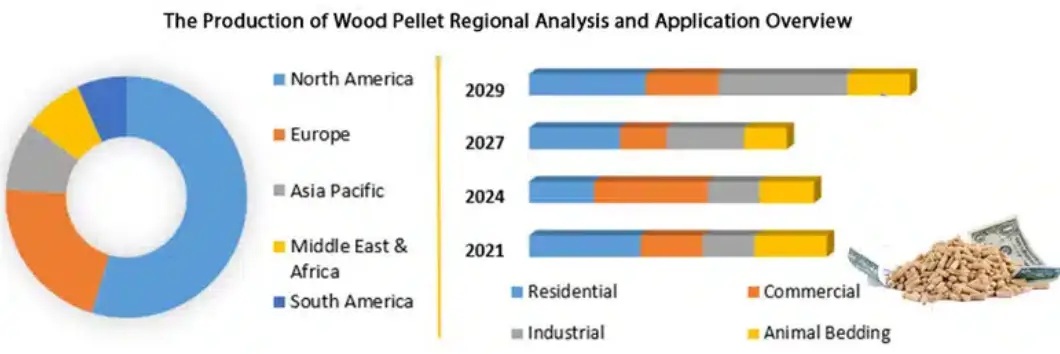
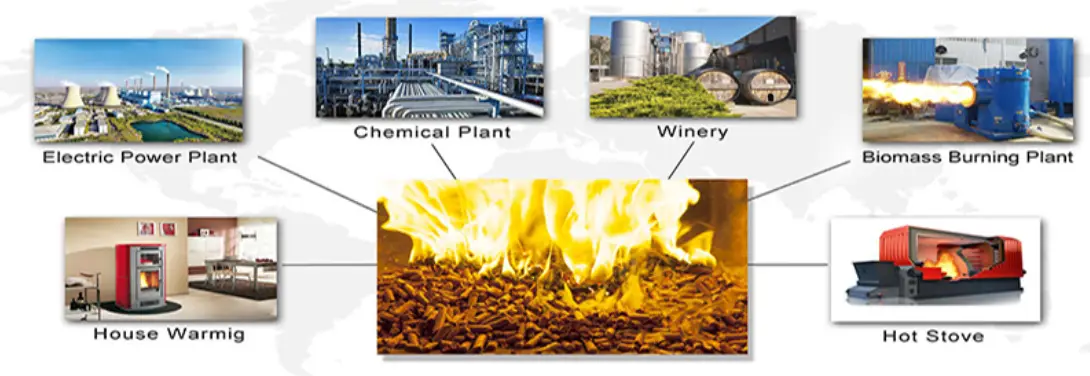
The wood pellet market is segmented by end-use: residential heating, industrial boilers, power generation, co-firing in utilities, and specialty applications such as animal bedding or activated carbon feedstock. Regional demand varies widely. Residential demand tends to be local or regional because pellet bulk shipping adds logistics cost. Industrial and utility buyers may accept larger volumes and have stricter technical specifications.
Primary buyers include:
- Retail consumers purchasing bagged pellets through stores and e-commerce.
- Local heating installers and service companies.
- Wholesalers and fuel distributors.
- Industrial boilers and combined heat and power plants.
- Export buyers (subject to regional demand and trade conditions).
A practical first step is to map buyers within 200 to 400 kilometers of your plant and estimate price tolerance for different pellet grades.
2. Business models and product grades
Choose a business model that fits local feedstock availability and market demand. Typical models:
- Bagged retail sales: more labor and packaging, higher unit margin, requires retail distribution or e-commerce.
- Bulk supply to industrial users: lower handling cost per tonne, contract pricing, larger order quantities.
- Co-located integrated supply: supplying pellets directly to a heat or power plant on-site or nearby.
Common pellet grades and typical uses:
- Premium heating pellets: low ash, high density, low moisture, meant for stoves and domestic boilers.
- Utility-grade pellets: wider tolerance for ash and density, sold in bulk to boilers.
- Agricultural and bedding pellets: manufactured from alternative biomass with lower requirements.
Packaging options: 15 kg, 20 kg, 25 kg bags for retail; big-bags or bulk for industrial offtake.
3. Raw materials and supply chain management
Feedstock drives your cost structure and product quality. Typical feedstocks include clean sawmill residues, forestry thinnings, wood chips, and clean wood waste. Alternative materials include agricultural residues such as straw and husks but these often require adjusted processing.
Key raw material metrics:
- Moisture content: ideal entering the pelletizer is typically 10 to 15 percent.
- Particle size: usually below 4 to 5 millimeters for consistent pressing.
- Contaminant limits: nails, stones, or foreign materials must be removed.
Actions to secure supply:
- Sign multi-year agreements with sawmills, wood processors, or forest owners.
- Establish buffer inventory to cover seasonal fluctuations.
- Implement incoming material testing and vendor scorecards.
4. Equipment selection and production capacity options
Two common pellet mill technologies exist: flat die and ring die pellet mills. Flat die mills are common for small-scale or feed applications. Ring die technology is standard for continuous, high-capacity, industrial fuel pellet production.
Equipment list (typical items for a pellet line):
- Chipper and hammer mill for size reduction
- Air-drying or rotary drum dryer to reach target moisture
- Pellet mill (ring die or flat die) with die and roller set
- Cooler to stabilize pellet moisture and hardness
- Screening unit to remove fines
- Packing station and bagging or bulk loading system
- Dust collection and aspiration system
Table 1. Typical equipment choices by capacity
| Capacity (t/h) | Pellet mill type | Typical hourly output | Typical capex range (equipment only) |
|---|---|---|---|
| 0.5 | Flat die or small ring die | 0.3 to 0.7 | Low to moderate |
| 1.0 | Small ring die | 0.8 to 1.2 | Moderate |
| 2.0 | Industrial ring die | 1.5 to 2.5 | Moderate to high |
| 5.0+ | Multiple ring dies, automated line | 4 to 8+ | High to very high |
LansonMachines supplies pellet presses and ancillary equipment at factory-direct pricing. Buying direct can reduce the equipment portion of initial capital outlay versus going through multiple intermediaries. Assess warranty terms and local service support when choosing supplier.
5. Facility siting, layout, and utilities
Pick a location that balances feedstock proximity and market access. Factors to examine:
- Proximity to raw material sources to minimize inbound freight
- Access to transport (road, rail) for outbound logistics
- Zoning and land cost
- Utility availability: reliable electricity, natural gas or biomass boilers for drying, water if required
- Environmental buffer to neighbors to manage dust and noise
A simple production layout: receiving yard, feedstock pre-processing, drying and pelletizing hall, cooling and screening, packaging and storage, and dispatch area. Plan dust collection around crushing and pelletizing areas and include fire prevention systems.
6. Production process: step-by-step operations
- Receiving and pre-inspection: Check moisture, particle size, and contaminants. Reject or rework out-of-spec deliveries.
- Size reduction: Chipping and hammer-milling to reach target feedstock size.
- Drying: Use a drum dryer or belt dryer to achieve optimum moisture. Energy efficiency here affects operating costs heavily.
- Pelletizing: Feed prepared material into the pellet mill. Monitor die condition, roller pressure, and temperature.
- Cooling: Cool pellets to ambient temperature to prevent crumbling and condensation in storage.
- Screening: Remove fines and recycle back to pellet mill.
- Packaging or bulk handling: Bagging lines for retail; pneumatic or mechanical systems for bulk.
- Storage: Dry, ventilated storage for finished pellets; stack bagged goods on pallets where possible.
Operational controls to prioritize: throughput tracking, moisture control, die wear tracking, and energy meter logging. A small change in moisture can change pellet quality and die life.
7. Quality control, standards, and testing
Implement a quality control program with routine testing for:
- Moisture content
- Bulk density
- Ash content
- Mechanical durability
- Pellet size and length distribution
Adopt or reference recognized standards for domestic markets or export buyers. Regular laboratory or in-house testing maintains customer confidence and reduces returns.
8. Financial planning and startup cost breakdown
Costs vary with scale. The following tables present illustrative cost buckets and sample capital and operating assumptions. Tailor numbers to your region, wages, energy costs, and logistics.
Table 2. Sample capex breakdown for a small to medium plant (1 t/h estimated capacity)
| Item | Notes | Estimated cost (USD) |
| Pellet mill and die set | Ring die mill for 1 t/h | 40,000 to 120,000 |
| Hammer mill and chipper | Size reduction equipment | 10,000 to 40,000 |
| Dryer and heat source | Drum dryer, burner or gas system | 30,000 to 150,000 |
| Cooler and screening | Mechanical cooler, screener | 10,000 to 40,000 |
| Packing system | Bagging, palletizing | 8,000 to 40,000 |
| Dust collection and aspiration | Required for safety and compliance | 8,000 to 30,000 |
| Building and civil works | Workshop, storage, utilities | 20,000 to 150,000 |
| Vehicles and handling | Forklift, small truck | 8,000 to 40,000 |
| Working capital | Raw material, payroll, utility buffer | 10,000 to 100,000 |
| Total (approximate) | Range | 144,000 to 750,000 |
Table 3. Operating cost categories (monthly example for 1 t/h plant running 20 days/month)
| Cost item | Monthly estimate |
| Feedstock | Highly variable by local supply |
| Energy and fuel | Dryer fuel or gas, electricity |
| Labor | 2 to 6 staff depending on automation |
| Maintenance | Spare dies, rollers, belts |
| Packaging | Bags, pallets |
| Transport | Outbound delivery |
| Overhead | Rent, insurance, admin |
Rough rule of thumb for capital per capacity is sometimes reported as $70,000 to $250,000 per ton per hour of installed capacity depending on technology and automation level. Smaller lines skew toward higher per-unit capital due to fixed costs. Keep contingency in the budget for spare parts and unexpected site work.
9. Permits, environmental compliance, and certifications
Typical requirements include:
- Business registration and local operating permits
- Environmental permits addressing dust emissions, wastewater (if any), and noise
- Fire safety approval and hazardous materials handling where relevant
- Occupational health and safety compliance for staff
If selling residential pellets, voluntary or regulated certification for pellet quality can open retail channels. Keep careful documentation for audits.
10. Marketing, distribution, and pricing strategies
Pricing depends on pellet grade, packaging, and region. Common strategies:
- Contract pricing for bulk customers with minimum off-take commitments
- Premium pricing for low-ash, certified retail pellets
- Promotional bundles and subscription services for recurring retail customers
Channel options:
- Local hardware stores and garden centers
- Fuel distributors and wholesalers
- Direct-to-consumer via e-commerce
- Industrial fuel procurement through tendering and long-term contracts
Logistics tip: bagged pellets require palletized handling. Invest in relationships with freight forwarders and regional distributors to reduce per-ton delivery cost.
11. Operations, staffing, and maintenance
Staff roles typically include:
- Plant manager or supervisor
- Operators for mill, dryer, and packing lines
- Quality control technician
- Maintenance technician
- Logistics coordinator and driver(s)
Develop shift rosters and preventive maintenance schedules, especially for die/roller maintenance. Track key wear parts and order spares proactively. Training on kiln/dryer operation, lockout-tagout, and dust explosion awareness is essential.
12. Risk management and contingency planning
Main risks:
- Feedstock supply disruption
- Energy cost spikes
- Equipment breakdowns
- Market oversupply or price erosion
Mitigations:
- Multi-source feedstock contracts and buffer stock
- Energy efficiency programs and alternative heat sources
- Service agreements and spare part stock
- Diversified sales channels and product grades
13. Sample 12-month launch timeline and milestones
Month 1 to 2: Market research and feasibility analysis Month 2 to 4: Site selection, permit applications, feedstock contracts Month 4 to 6: Order equipment and prepare civil works Month 6 to 8: Install equipment, commission utilities Month 8 to 9: Trial production, optimize process and QC Month 10 to 12: Full production, marketing ramp, initial sales contracts
14. Key performance indicators and scaling strategy
KPIs to track:
- Tons produced per working hour
- Yield from feedstock to finished pellet
- Energy consumption per ton
- Pellet mechanical durability and ash
- Order fill rate and customer complaints
Scaling options:
- Add parallel pellet lines for modular growth
- Invest in automation for packaging and material handling
- Integrate additional feedstock sources or downstream products
15. FAQs
Q1. What scale should I start with?
Start with a scale you can fund, control, and sell. Many new operators choose 0.5 to 2 t/h capacity which offers manageable capital needs and quicker payback.
Q2. How much does a pellet mill cost?
Prices vary by type and capacity. For small to medium ring die machines expect the equipment portion to be tens of thousands of US dollars; full line costs depend on drying and handling choices.
Q3. What raw material is best?
Clean wood residues like sawdust and shavings make the best fuel pellets. Consistent moisture and low contaminants yield better reliability and longer die life.
Q4. How energy intensive is production?
Drying is usually the largest energy consumer. Choose efficient dryers and optimize incoming moisture to lower operating costs.
Q5. What certifications matter?
Domestic markets may accept self-declared specs but certified low-ash, high-durability pellets win retail channels and premium pricing.
Q6. How do I avoid dust and fire risks?
Install proper dust collection, grounding, and follow explosion-risk engineering; train workers and have emergency plans.
Q7. How long do pellets last in storage?
Properly dried and stored pellets can last months without quality loss. Avoid exposure to moisture.
Q8. Is starting a pellet business profitable?
Profitability depends on feedstock cost, energy, and sales price. Margins generally improve with scale, reliable feedstock, and optimized operations.
Q9. How to price pellets?
Benchmark local competitors and factor in packaging and delivery. Bulk prices are lower per tonne than bagged retail.
Q10. Can I export pellets?
Yes, but check international specifications, certifications, and freight economics. Export is typically viable for larger producers.
Addenda: Tables and templates
Sample monthly revenue table (illustrative)
| Item | Assumption | Monthly value |
| Capacity | 1 t/h, 8 hours/day, 20 days | 160 tonnes/month |
| Selling price | $200 per tonne (bagged/bulk mix) | 160 x 200 = 32,000 |
| Variable costs | Feedstock, energy, packaging | 160 x 120 = 19,200 |
| Gross margin | 12,800 |
This simple example shows how volume, price, and cost per tonne determine monthly profitability.
Sample supplier evaluation checklist
- Equipment warranty and spare parts lead time.
- Local technical support and commissioning services.
- Energy consumption and die life estimates.
- Field references and prior installations.
- Training and documentation provided.
Closing notes from LansonMachines
LansonMachines manufactures pellet presses and related systems with direct factory pricing. If you prefer to reduce upfront equipment cost and receive technical onboarding, consider evaluating a factory-direct proposal. We can provide equipment specifications, performance curves, and reference installations to ensure your project fits the intended capacity and budget.